
The Albert Chain: More Than a Watch Chain
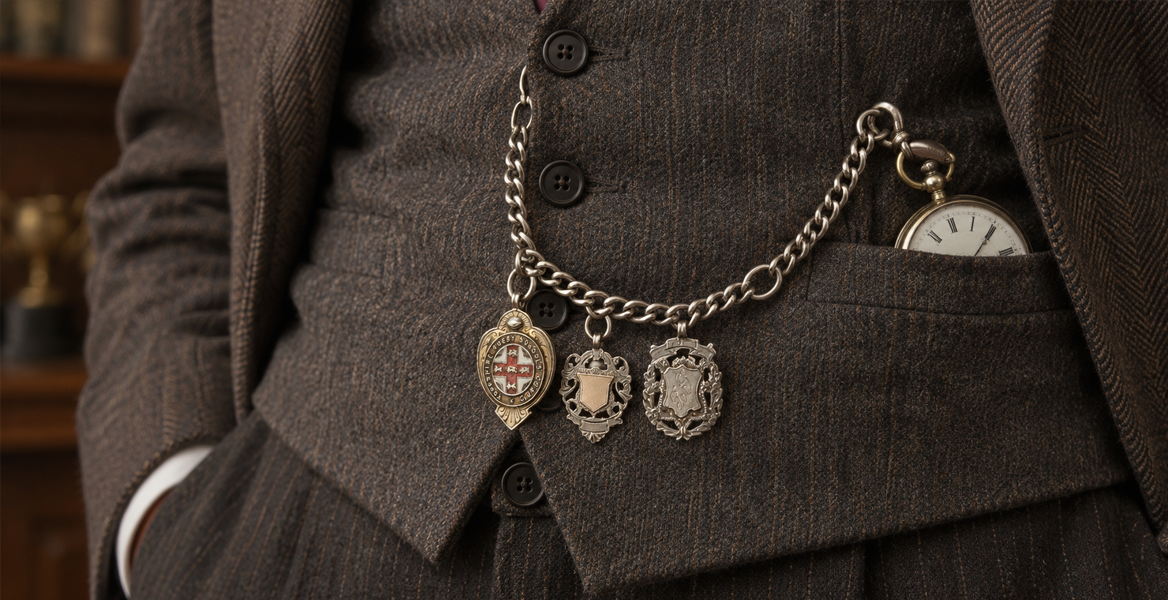
In late Victorian and Edwardian Britain, the Albert chain was one of the defining accessories of a well-dressed gentleman. It was attached to a pocket watch, which was usually kept safely inside a waistcoat pocket, while part of the chain remained visible across the front of the waistcoat. But the chain was often more than a practical object. It could also carry small personal ornaments known as fobs, turning an everyday accessory into a public display of identity.
Achievements Worn in Public
Fobs could represent clubs, schools, societies, military service, sporting competitions or personal achievements. Sporting medals were especially suitable for this purpose because they transformed success into something that could literally be worn. A medal won on a rugby field might therefore become part of a gentleman’s daily dress rather than being stored away in a box. This example includes three sporting fobs, one of them dating to 1908, preserving a small glimpse of British sporting life from more than a century ago.
“Before achievements were displayed on a screen, they could be displayed on a waistcoat.”
A Victorian and Edwardian Social Language
The Albert chain became part of a wider visual language of British society. The watch suggested punctuality and respectability, while the fobs offered clues about the owner’s interests, loyalties and accomplishments. To someone passing in the street, a small medal could quietly reveal membership of a club, success in competition, or pride in a particular institution. In this sense, the chain functioned almost like an early personal profile, created not with photographs and posts, but with metal, enamel and memory.
When Rugby Became Part of Everyday Dress
For rugby history, objects like this are particularly revealing because they show how deeply sport could become woven into everyday life. Rugby medals were not always trophies hidden in drawers or cabinets; some were carried and displayed as part of personal dress. Shown here with a pocket watch from the same period, the chain helps reconstruct a distinctly British tradition in which time, status, sport and personal achievement all met on the waistcoat. More than a century later, these small objects still communicate exactly what they were designed to show: this mattered to me.