

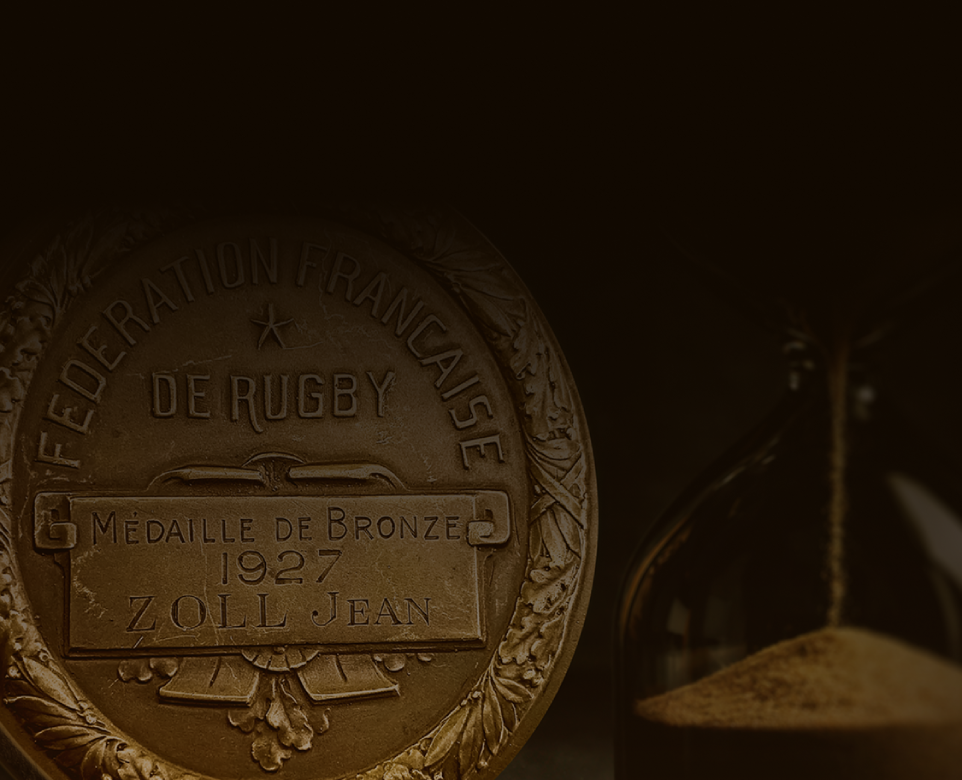
Beyond
the pitch
The game as history's witness
The Arena of War
In the darkest chapters of human conflict, rugby provided a vital lifeline of camaraderie and resilience for soldiers on the front lines. These artifacts bear witness to a game played amidst trenches and garrison towns, proving that even in the shadow of war, the human spirit sought solace in sport.
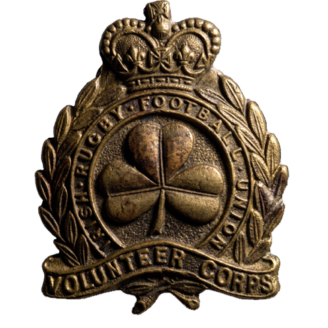
Ireland 1913
Ireland 1913
The Great War: Irish Rugby Football Union Volunteer Corps Badge
This brass cap badge belonged to the Irish Rugby Football Union Volunteer Corps, formed during the outbreak of the First World War. It stands as a powerful reminder of the "Pals' Battalions" era, when entire rugby clubs traded the pitch for the trenches to fight on the Western Front. The artifact illustrates how deeply national sporting identity was intertwined with military duty during the devastating early years of the 20th century.
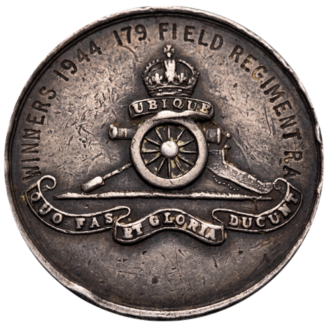
England 1944
England 1944
The Second World War: 179 Field
Regiment R.A. Medal
Regiment R.A. Medal
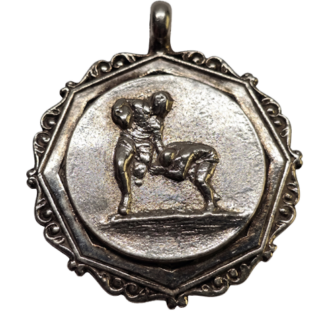
Forged in the decisive year of 1944, this medal was awarded to the rugby champions of the 179th Field Regiment, Royal Artillery, amidst the intense campaigns of the Second World War. The rugged, dynamic depiction of a tackle reflects the harsh realities of wartime, highlighting how soldiers relied on the brutal sport to maintain combat readiness and brotherhood. It remains a testament to the survival of the human and sporting spirit amidst global devastation.
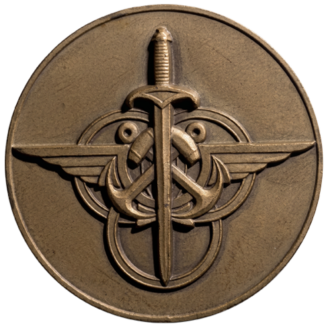
Algeria 1957
Algeria 1957
The Era of Decolonization: 1957 North African Military Championship
Minted in 1957 during the height of the Algerian War of Independence, this bronze medal represents the turbulent era of decolonization. Even in the epicenter of a fierce and complex anti-colonial conflict, military rugby championships were organized to enforce discipline and a sense of routine among troops. This artifact highlights how the sport was strategically utilized to maintain morale and institutional order during the twilight of the colonial empire.

The Collegiate Roots
Long before it conquered the globe, the sport was forged in the courtyards and muddy pitches of schools and universities. This era defined the foundational laws, academic prestige, and enduring amateur ethos of the game — captured here in early medals that celebrate student passion and fierce collegiate rivalry across Europe.
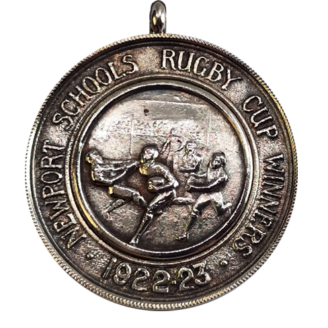
Wales 1923
Wales 1923
Welsh Collegiate Rivalry: 1923 Newport Schools Rugby Cup
Featuring a dynamic relief scene of players locked in an intense offensive and defensive struggle, this silver medal captures the raw energy of Welsh youth rugby in the 1920s. Issued during an era when Newport was a bustling epicenter of Welsh rugby passion, it celebrates the fierce inter-school competitions that fueled the nation's rugby culture. The artwork reflects both the physical demands and the tactical evolution of the game at the schoolboy level.
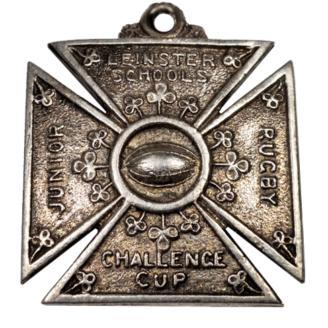
Ireland 1931
Ireland 1931
Irish Schoolboy Heritage: 1931 Leinster Schools Junior Rugby Challenge Cup
Crafted in silver with a prominent central rugby ball and shamrock motifs, this ornate cross represents the deep-rooted tradition of Irish schoolboy rugby. As part of Leinster's prestigious Schools Cup framework, it highlights the early grassroots pipeline that shaped generations of players through intense academic rivalries. The medal stands as a symbol of regional pride and the foundational role of schools in Ireland's sporting history.
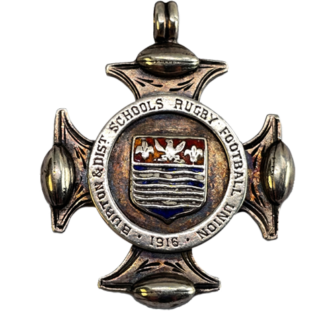
England 1916
England 1916
Early English Grassroots: 1916 Burton & Dist. Schools Rugby Football Union
Distinguished by its unique cross design adorned with four rugby balls, this 1915 silver award highlights the early expansion of organized schoolboy competitions in England. Minted during the turbulent years of the First World War, it demonstrates how local school unions preserved the core values and continuity of the sport among youth. This piece captures the enduring amateur spirit and commitment to character-building through rugby at a local level.
The Currency of Time
Rugby’s global journey is permanently encoded into metal through the diverse, and sometimes forgotten, timekeeping systems of the world. From the Buddhist calendar and the Hijri year to alternate political epochs, these remarkable pieces demonstrate how the sport intersected with profoundly different civilizations.
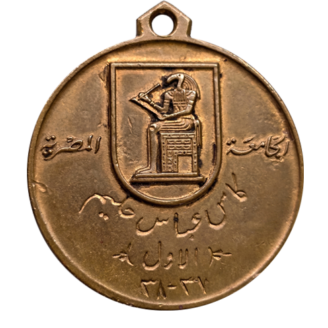
EGYPT 1356
EGYPT 1356
Dated 1356 in the Islamic (Hijri) calendar.
Bearing the Hijri Year 1356 alongside the Gregorian 1938, this remarkable piece contrasts an ancient Egyptian deity with a modern rugby scene. The artifact masterfully bridges ancient iconography with an imported game, illustrating rugby's seamless integration into a profoundly distinct cultural landscape.
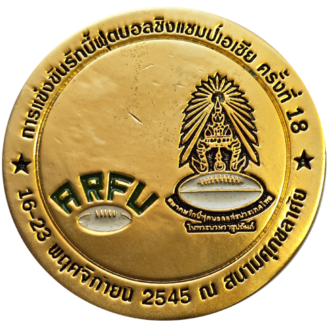
Thailand 2545
Thailand 2545
Thai Buddhist calendar.
Commemorating the 2002 Asian Rugby Tournament in Bangkok, this piece proudly bears the year 2545 of the Thai Buddhist calendar. This striking chronological juxtaposition illustrates the enduring presence of traditional timekeeping, as nations weave their unique heritage into the modern global game.
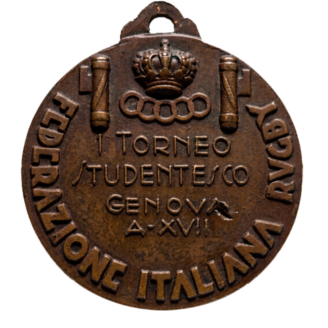
Italy XVII
Italy XVII
Anno XVII of the Fascist Era
Dated Year XVII of the Fascist Era, this 1938 medal intentionally replaces the 'U' in rugby with a classical Roman 'V'. This striking typographic choice serves as a deliberate homage to the Roman Empire, demonstrating how sport was visually reimagined to align with state ideology.
The Match of Mercy
Throughout its history, the rugby community has consistently rallied to support those in need, using the pitch to raise crucial funds for hospitals and disaster relief. These philanthropic artifacts reflect the game's inherent nobility, highlighting a tradition of compassion that extends far beyond the final whistle.
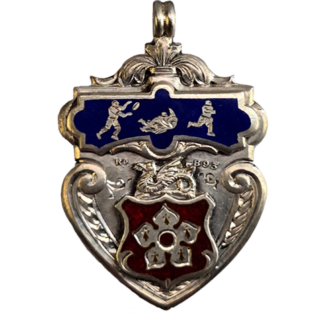
England 1907
England 1907
The Roots of Philanthropy: 1907 Rolleston Charity Cup
Dating back to 1907, this early award proves that community support is not a modern trend, but a foundational pillar of the sport. It illustrates how the tradition of compassion was permanently woven into the very DNA of rugby at the turn of the 20th century. Throughout its history, the game has consistently used its fierce competitive nature to aid those in need, a legacy proudly carried by this historic cup.
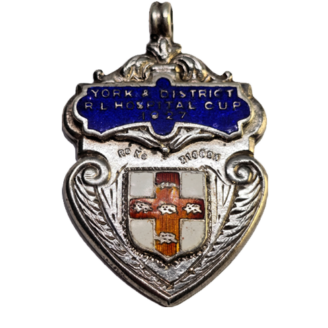
England 1927
England 1927
Funding Local Healthcare: 1927 York & District Rugby League Hospital Cup
Before the establishment of the National Health Service, local British hospitals relied heavily on community fundraising to survive. This 1927 medal embodies the crucial role of local "Hospital Cup" tournaments, demonstrating how rugby players actively fought on the pitch to finance essential medical care for their communities. It serves as a literal, physical embodiment of the sport's deep-rooted commitment to raising crucial funds for public health.
England 1940
England 1940
Global Compassion: 1937-1940 Rugby Club Red Cross & Comforts Fund
Spanning the tense pre-war years and the dawn of the Second World War, this award represents the rugby community's immediate response to disaster relief. The "Comforts Fund" was designed to provide warm clothing and vital essentials to soldiers and civilian victims, perfectly capturing the inherent nobility of the sport during times of global crisis. It stands as a powerful testament to how rugby unions mobilized compassion when the world needed it most.
The Odyssey of Tours
The evolution of international rugby is a grand story of epic maritime journeys and pioneering tours that united distant continents. These commemorative medals track the legendary voyages of early national teams, marking the transformative moments when a localized game truly became a global spectacle.
South Africa 1906
South Africa 1906
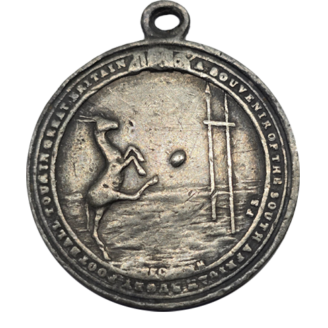
The Birth of the Springboks: 1906 South African Tour of Great Britain
This historic medale commemorates the very first overseas tour by a South African national rugby team, marking a monumental maritime journey to Great Britain. It holds immense historical significance as it features the inaugural appearance of the iconic Springbok emblem, a symbol that would soon define South African rugby on the global stage. The 1906 voyage stands as a pioneering moment that helped transform a localized game into a truly intercontinental spectacle.
Wales 1908
Wales 1908
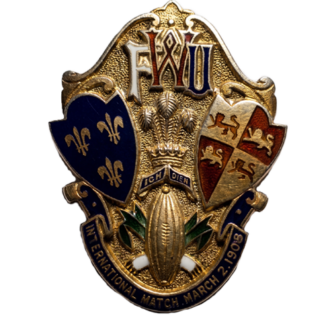
Expanding Horizons: 1908 Wales vs. France International Medal
Crafted by the renowned Crouch of Cardiff, this award marks the first-ever international match between Wales and France on March 2, 1908. It captures a pivotal moment of cross-cultural exchange, illustrating how the sport’s epic journeys expanded beyond the British Empire to firmly take root in continental Europe. This historic fixture laid the crucial groundwork for international touring and what would eventually become the beloved Six Nations Championship.
England 2003
England 2003
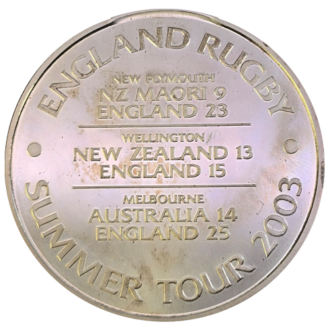
An Enduring Tradition: 2003 England Rugby Summer Tour
Featuring the iconic emblems of England, the New Zealand All Blacks, and the Australian Wallabies, this modern medal proves that the grand tradition of intercontinental touring remains a cornerstone of the sport. Minted for England’s grueling 2003 summer campaign in the Southern Hemisphere, it bridges the gap between the pioneering voyages of the early 1900s and the modern professional era. It serves as a powerful reminder that the global rivalries forged on those early ships continue to thrill millions worldwide today.